
The Americanisation of Britain’s Media
How Britain’s media is being reshaped by billionaires, bullied by ideologues, and pushed towards the American model of misinformation and control.

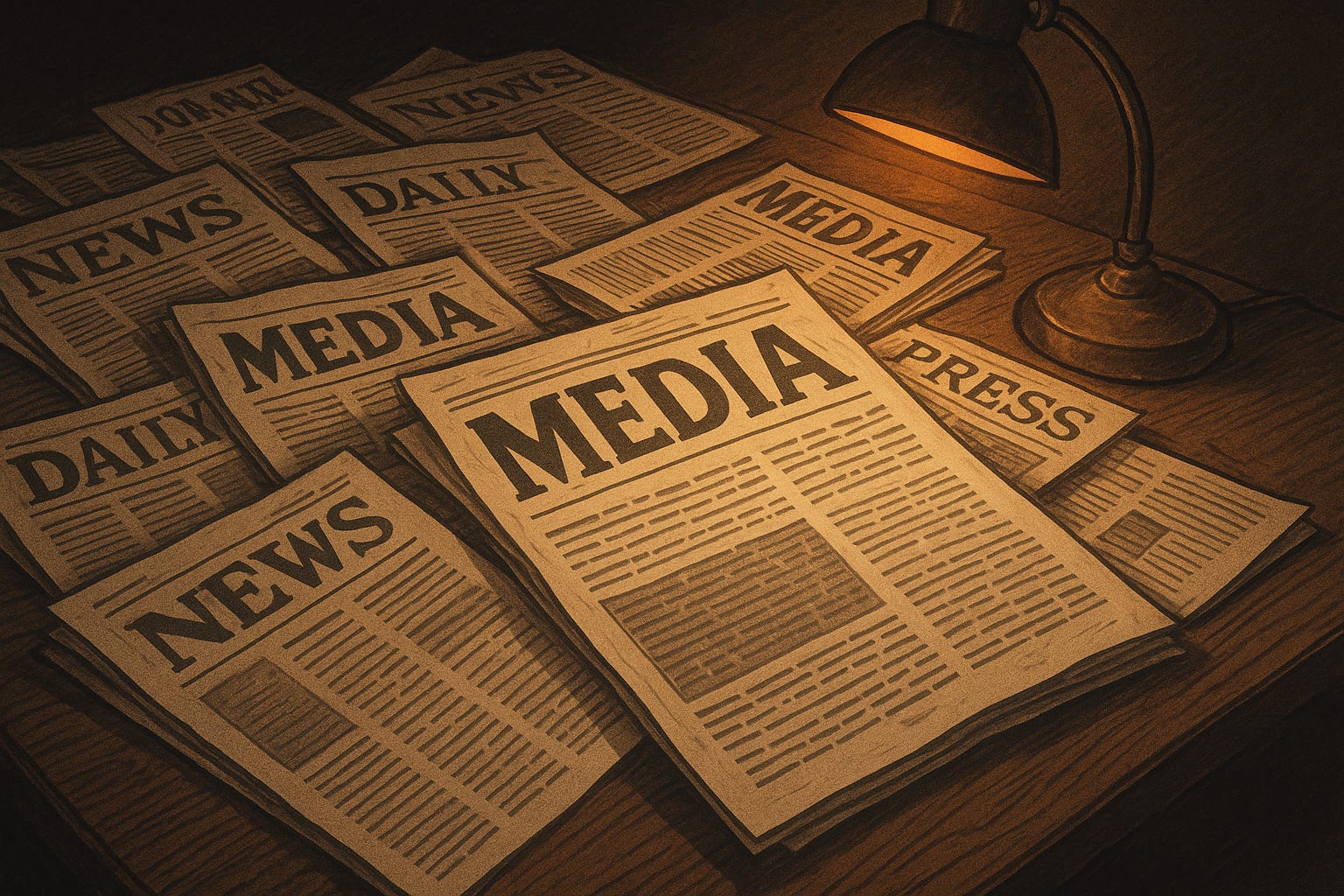
In Britain today, the BBC sits at the centre of a storm it did not create and is no longer strong enough to control, yet the solution being pushed by its loudest critics is not repair but demolition, and the result of that demolition would be a media landscape that looks far more like the worst of the United States than anything recognisable as a public service system. For all its misjudgements, and there have been many, the BBC still operates on the principle that it answers to the public rather than to a handful of shareholders, which makes it a direct obstacle to those who want a media environment where power buys the microphone and never has to face serious scrutiny.
Across the last three decades, the American media system has been reshaped by deregulation, mergers and an obsession with scale, and the outcome has been a small cluster of gigantic companies such as Comcast, Disney, Paramount, Warner Bros Discovery and Fox controlling nearly everything from cable news to streaming to film studios. Those companies swallow rivals, chase subscriber numbers and bundle platforms in the hope of standing up to Netflix and Amazon, as the recent manoeuvring around Warner Bros shows, where Paramount Skydance, backed by the Ellison family with close ties to Trump, is circling a once mighty studio in order to build a larger, more concentrated streaming empire. When so much cultural power sits in so few hands, editorial judgement no longer revolves around public value, it revolves around catalogue exploitation, political access and shareholder comfort.
That American logic is now being imported into Britain in ways that are obvious once you choose to see them. GB News functions as the clearest example, built in conscious imitation of Fox, financed by rich ideologues and presented as a people’s channel while relentlessly pushing a tight set of right-wing narratives on immigration, culture and the BBC itself. Its presenters are not obliged to meet the standards expected of public service broadcasters and repeatedly fall foul of basic rules on accuracy, yet the sanctions remain minimal, and every breach serves its larger story about a heroic insurgent force battling corrupt elites. This is not a safety valve for neglected voices, but a weapon aimed directly at the idea of impartial journalism.
Alongside that, the printed press has been pulled into an unmistakable pattern of monopoly and manipulation. A small set of owners control the bulk of popular titles, with Murdoch shaping political weather through the Sun and the Times, the Barclay interests steering the Telegraph into permanent culture war mobilisation, and the Mail group pushing a daily mix of fear, resentment and misrepresentation that shapes millions of voters’ sense of reality before they even turn on a television. These are not benign quirks of a free market. They are the architecture of power in a country where most people still consume news filtered through a handful of rich men and their political preferences.
The digital platforms that now mediate public conversation have accelerated this shift instead of restraining it. Meta has hollowed out fact-checking and throttled news distribution whenever it threatens profit, while X under Musk has turned into a megaphone for the far right in Britain and across Europe, boosting accounts that attack migrants, minorities and public institutions with almost no meaningful moderation. Algorithms decide which stories rise and which sink, and those algorithms reward suspicion and conspiracy far more readily than sober reporting. The effect is to tilt the entire information environment in favour of those who shout hardest and care least about whether what they say is true.
In that context, the campaign against the BBC is not some isolated debate about tone or impartiality. It is part of a broader effort to strip away the last remaining obligations to balance and evidence. Trump’s circle understands this perfectly, which is why his press secretary publicly declared that the BBC is “dying” and told followers to watch GB News instead, and why Trump himself has chosen to respond to a flawed Panorama edit not with a demand for correction but with a billion-dollar legal threat designed to frighten the corporation into permanent submission. Farage and his allies in Britain repeat the same message, using every misstep as another excuse to call for defunding and replacement.
The reality is that the BBC has mishandled important stories, including its editing of Trump’s January sixth speech, yet the context that never appears in the right-wing outrage is that Trump spent weeks telling supporters the election had been stolen, urging them to “fight like hell”, calling them to Washington with promises that it would “be wild”, and using the word “fight” more than twenty times on the day itself. That rhetoric ended with the Capitol breached and people dead, and later with more than a thousand pardons handed out to allies and others whose loyalty mattered more to him than the law. To pretend that an edit in a documentary is the central scandal, and to ignore the wider pattern of incitement and impunity, is a deliberate act of bad faith.
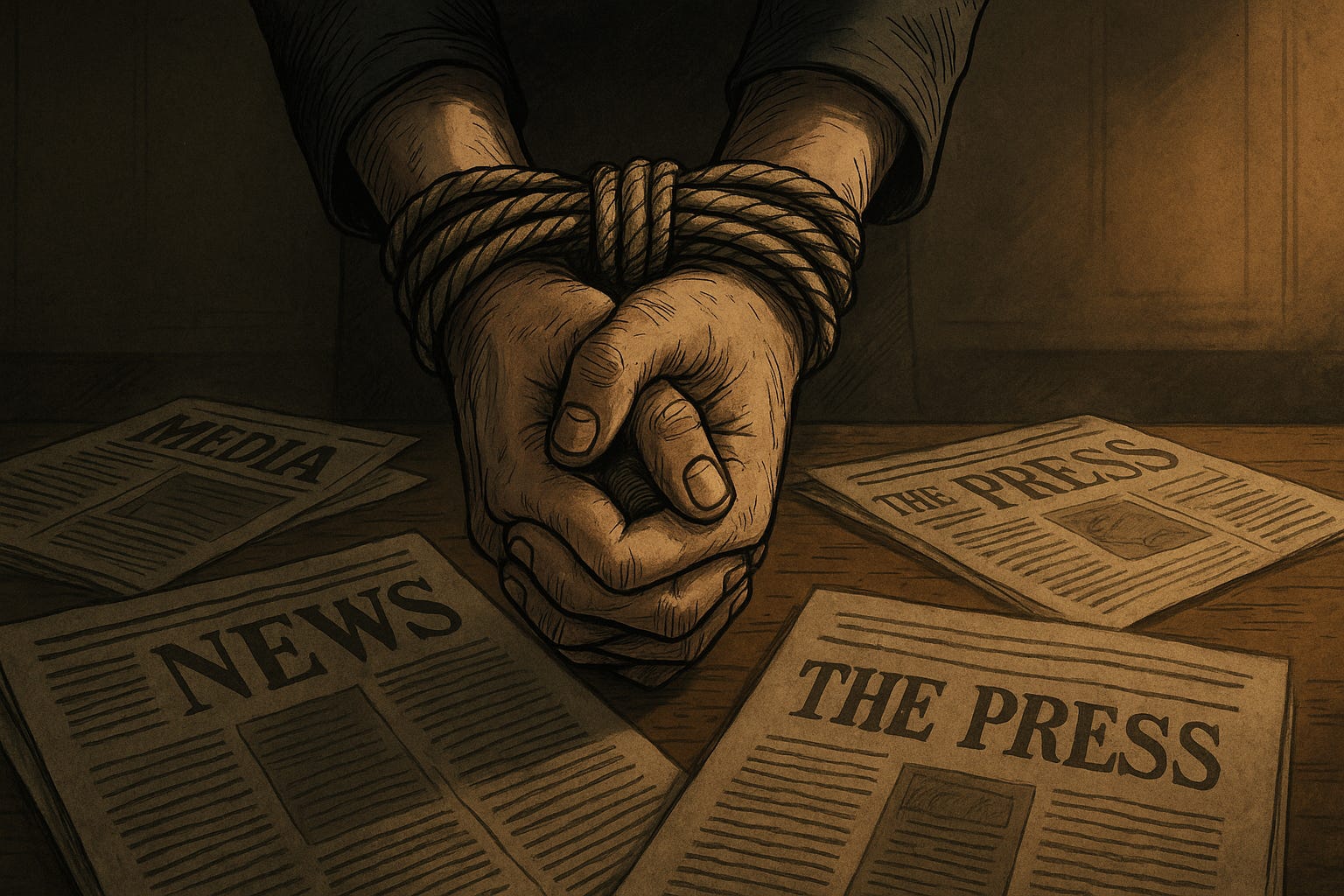
What is being built in Britain, if this continues, is a system where public understanding is shaped almost entirely by commercial and political calculation. Local news has been gutted by asset-stripping funds that buy papers, sack reporters and run skeletal operations until the last revenue dries up, leaving communities with no independent coverage of councils, courts or public services. National outlets chase clicks and culture war controversy, because those are cheaper to produce than sustained investigations into who owns what and who profits when public institutions are broken. In that vacuum, people cling to the loudest voices, which usually belong to the same politicians and media figures who created the mess in the first place.
The human cost of this drift is not abstract. When media systems are captured, governments face less resistance when they defund hospitals, sell off housing or victimise refugees, because there are fewer trusted outlets to explain what is really happening. Lies about migrants “invading” or “swamping” the country spread quickly and go largely unchecked, while people on small boats or in overcrowded hostels pay the price in abuse, policy cruelty and sometimes physical danger. A public that cannot rely on shared facts becomes easier to divide and to turn against its own weakest members.
Defending the BBC in this moment is not an act of sentimentality, but a recognition that without a strong public broadcaster the slide towards an American-style media hellscape will speed up. The BBC still has the reach, the infrastructure and the formal duty to cover the whole country rather than a narrow faction, and for all its faults it remains one of the few institutions that regularly asks difficult questions of those who govern. If that is allowed to fail or be captured, what replaces it will not be a healthier pluralism. It will be a landscape in which GB News sets the tone, billionaires set the limits, and the rest of us are left shouting into platforms that treat our attention as a resource to be mined, not a trust to be respected.
If Britain wants to avoid that fate, it needs to recognise what is happening while there is still time. That means funding and reform for public media, proper limits on ownership concentration, real regulation of disinformation, and active support for independent outlets that do not exist to serve one party or one class. Without that, the country will end up in the position the United States already occupies, where the concept of a shared reality is treated as naive, and where those who benefit most from chaos are handed the keys to the information system. At that point, the damage will be far harder to undo than it is to prevent.